Why Don't We Use HMR?
Last updated: 13 Oct 2026
831 Views
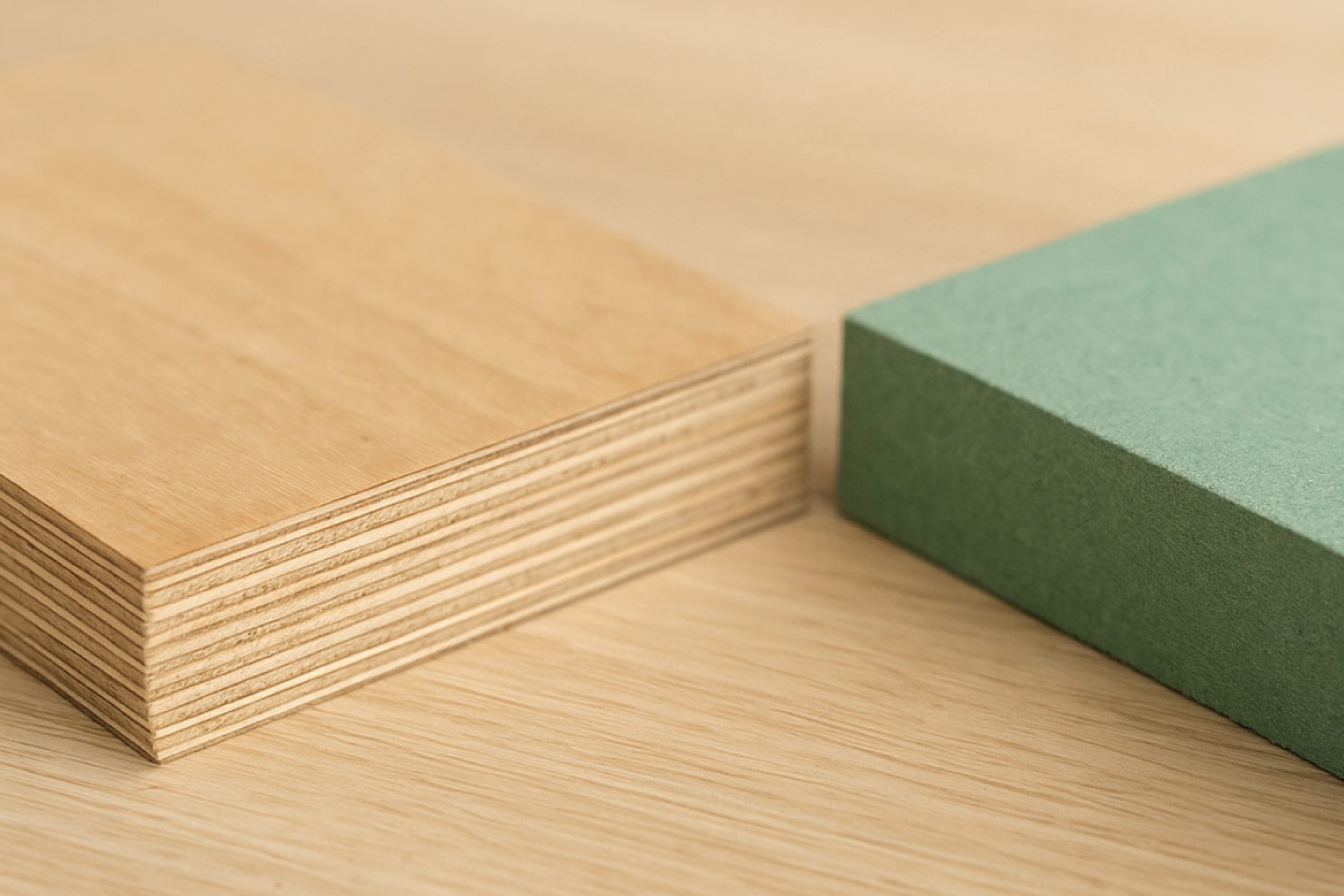
Why we choose plywood over HMR
When people think about built-in furniture, design usually comes first. What often gets overlooked is the material inside, the structure that holds every piece together. Yet that material decides the quality, the lifespan and even the health of the people in your home. That is why fync does not use HMR, even though it is one of the most popular materials on the market.
What is HMR, and why is it so common in built-ins?
HMR (High Moisture Resistant MDF) is a type of MDF developed to resist moisture better than standard MDF.
Pros: affordable, smooth and easy to work with.
Weak point: boards that don't meet standards can contain high levels of formaldehyde, which can affect indoor air quality, especially in closed rooms.
Weak point: boards that don't meet standards can contain high levels of formaldehyde, which can affect indoor air quality, especially in closed rooms.
What is plywood, and why don't more people know about it?
Plywood is made from real wood peeled into thin sheets, then pressed together with the grain of each layer running across the one below. Because it costs more than HMR, it is mostly used for formwork in construction.
Pros: stronger and more flexible than particleboard, MDF or standard HMR; second only to solid wood, because each layer resists pulling and pressing forces in a different direction.
Weak point: a higher price, but given its lifespan and long-term durability, it is excellent value.
Weak point: a higher price, but given its lifespan and long-term durability, it is excellent value.
Plywood vs HMR at a glance
| Property | Plywood | HMR |
| Inner structure | Multiple layers of real wood, cross-grained for high strength and flexibility | Wood fibre and glue pressed into one uniform board |
| Strength | Strong; handles pressure and tension well | Moderate |
| Moisture resistance | Better; doesn't swell easily and suits Thailand's climate | Resists moisture to a point, but can still swell over time |
| Lifespan | 10+ years with proper care | Shorter, especially in humid areas |
| Health safety | JAS standard; safe, low VOCs | Glue may contain formaldehyde that affects indoor air |
| Smell | No chemical smell | May smell of chemicals that sting the eyes and nose or cause itching |
| Value | Costs more, but worth it in the long run | Cheaper, but wears out faster |
| Best for | High-quality built-in work | General work |
Why fync uses premium ENF plywood
As above, we use JAS-standard plywood because it is safe for health, free of chemical smells and suited to homes with young children or pets. It is tested for very low formaldehyde emissions (low VOCs), keeping you safe from carcinogens. With the properties of real wood, plywood is clearly more moisture-resistant and stronger than HMR, which is why it is the core material in every fync built-in.
Every home we build starts with materials chosen with intent, so your home is not just beautiful today but solid and safe for many years to come.
A good home always starts with good materials.
Written and edited by: เจ้าแม่ชุน
Related Content

That new-furniture smell may be formaldehyde. Learn what it is, the E-grade emission standards, and how to choose materials for a healthier home.
7 Nov 2025
