Plan Built-in Storage Around Your Daily Routine
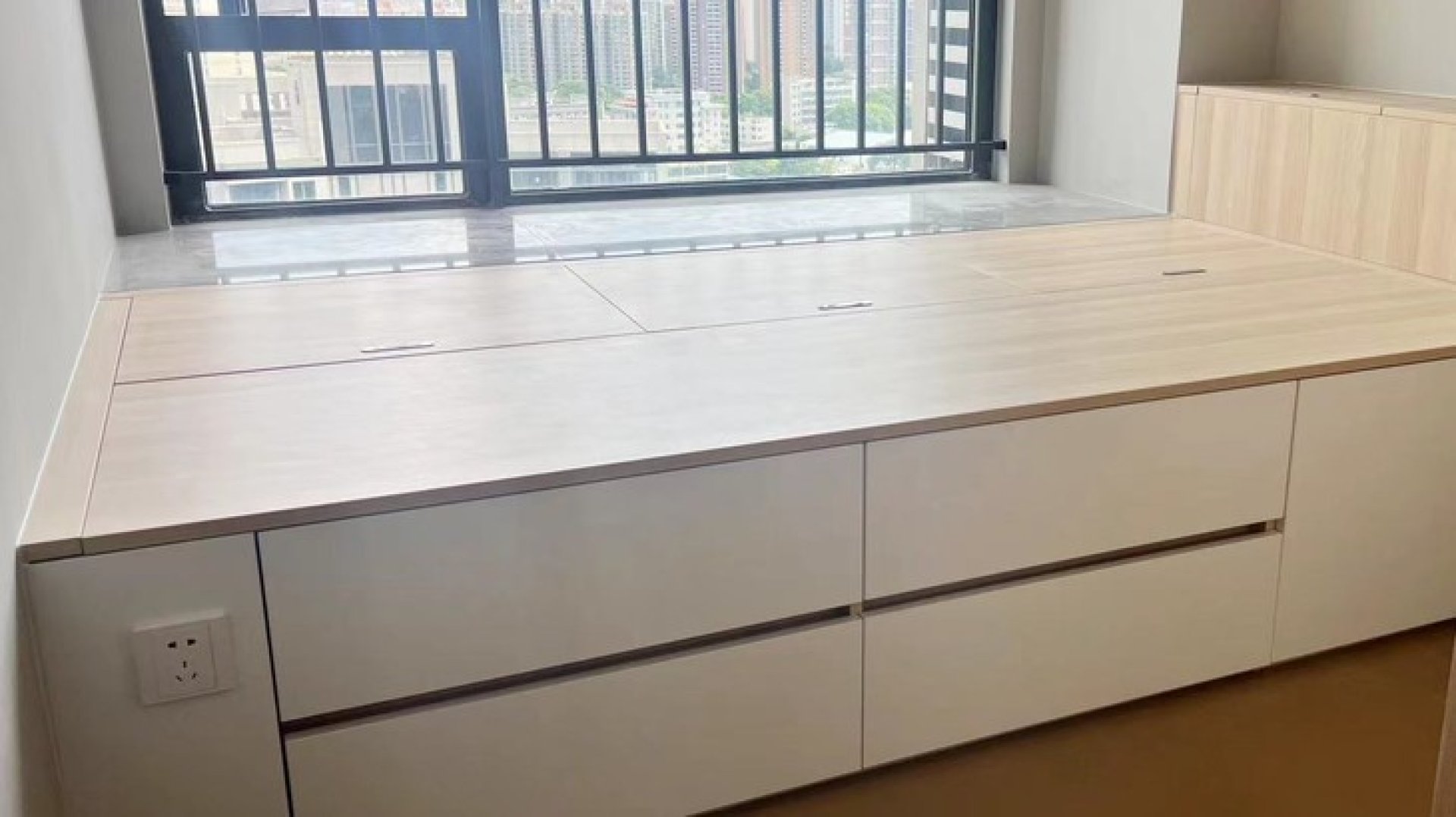
A home with plenty of cabinets can still feel cluttered. Usually there aren't too few cabinets; they're in the wrong places. Shoes pile up at the door because the shoe cabinet is deep inside the house, keys go missing every morning because there's nowhere to drop them by the door, and the pots live on the opposite side of the kitchen from the hob. Good built-in planning starts with the routes your household actually walks every day, not with whichever wall is empty.
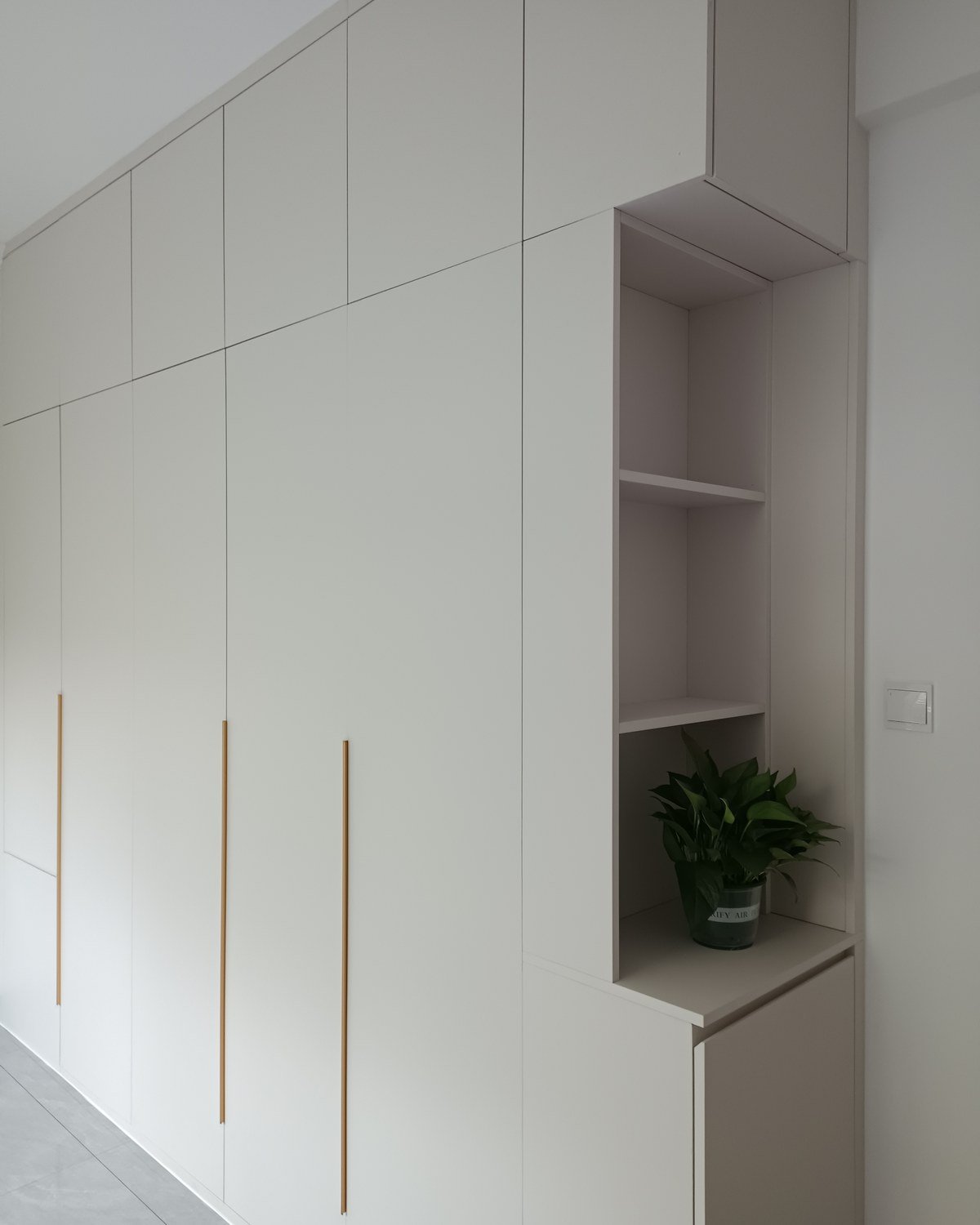
3 simple rules of storing things where they're used
- Store at the point of use. Whatever you use in a place should live within one or two steps of it.
- Keep everyday items in easy reach. The zone between hip and eye level (about 60–160 cm) is for daily things. The very top and bottom are for things you rarely use.
- Count your things before designing. How many pairs of shoes, how many long hanging clothes, how many pots and pans. These numbers set the size of each compartment, not the width of the wall.
Follow the routes through your home
- Front door: in and out. A shoe cabinet 35–40 cm deep, with a spot for keys, bags and umbrellas and a seat for putting on shoes. If there's room, add a hook for raincoats by the door.
- Kitchen: prep, cook, wash, store. Pots, pans and seasonings near the hob; knives and chopping boards between sink and hob; plates near the sink or dish rack. Deep drawers for pots are easier to use than doors you have to bend down and search behind.
- Bedroom: getting dressed. Divide long hanging, short hanging, drawers and folded shelves according to the clothes you actually own (read more: How to lay out a built-in wardrobe).
- Laundry: wash, dry, fold, put away. A cabinet above the washing machine for detergent, and a folding surface on the way to the bedroom.
- Bathroom: choose moisture-resistant materials. Spares go under the basin; daily items in a mirror cabinet or a shelf beside it.
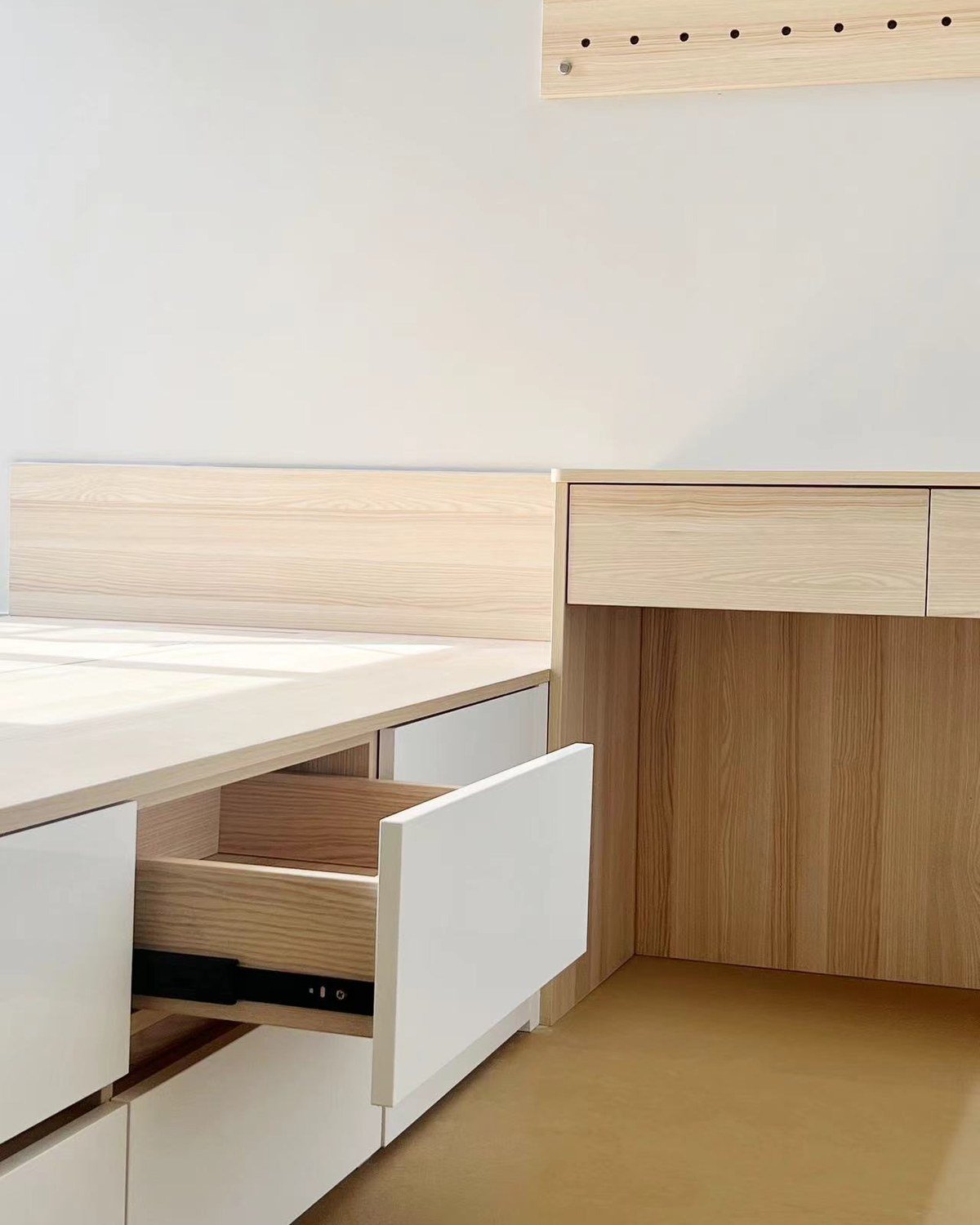
Internal fittings make things truly easy to reach
Full-extension drawers, pull-out baskets in tall units, corner fittings and pull-down hanging rails let you reach deep or high items in one move. Good hardware carries the load and keeps opening smoothly for years (read more: Hinges and drawer slides).
Cabinets that fit your life
During the site survey, the fync team asks about your household's routine before drawing anything: who leaves home when, how often you cook, what you collect. Then we place the cabinets and internal fittings along those routes. Every cabinet has an ENF-grade plywood carcass and JOYLINK and BLUM hardware.
Good storage isn't measured by how many cabinets you have, but by never having to go looking for things.
Want cabinets that really fit the way you live? Book a site survey with fync and tell us what a day in your home looks like.